If you’ve taken your child to specialist after specialist… run every test… tried every supplement, diet, therapy, and protocol… and you’re still sitting there wondering, “Why is nothing working?” — this is for you.
There is one word, one concept, one missing piece that almost nobody is talking about. And once you understand it, everything starts to make sense.
That word is subluxation.
By the time you finish reading this, you’ll understand your child’s nervous system better than most pediatricians do. And more importantly, you’ll finally have a framework that makes sense of everything you’ve been seeing.
You’re Not Imagining It — and You’re Not Alone
Here’s a number that should stop you cold: 40% of school-aged children today have at least one chronic health condition. That’s nearly half of our kids.
The autism, ADHD, anxiety, gut, sensory, sleep, and immune epidemics are real. Parents feel it. They live it every day. And yet, when they bring their concerns to the pediatrician’s office, they almost always hear one of three things:
- “They’ll grow out of it.”
- “It’s just genetics.”
- “Let’s wait and see.”
But here’s what parents know in their gut — and what the research is starting to confirm: kids don’t grow out of these things. They grow into the next wave.
Colic becomes ear infections. Ear infections become sensory issues. Sensory issues become ADHD. ADHD becomes anxiety. Different labels. Different specialists. Different waiting rooms. But underneath it all? The same stressed-out, wound-up, out-of-balance nervous system.
So What Is Subluxation — Really?
Most people — including many chiropractors — think of subluxation as “a bone out of place.” That’s about 10% of the picture.
Subluxation is fundamentally a neurological issue. It has three distinct layers that stack on top of each other and go deep into the system:
- Misalignment — A structural shift within what we call the NeuroSpinal System. Yes, a bone is involved, but it’s the downstream effects that matter most.
- Fixation and Restricted Motion — Joints lose their ability to move freely. And when joints stop moving freely, they lose something called proprioception, which we’ll get into in a moment, because this is everything.
- Neurological Interference and Imbalance — The brain stops receiving clean, accurate information from the body, and starts receiving stress signals instead.
Think of it this way: your child was designed to operate at 5G speed. Subluxation drops them down to dial-up. The hardware is fine — the signal is the problem.
The Piece Nobody Teaches Parents: Proprioception vs. Nociception
This is where we go a little deeper — and this is the piece that changes everything.
Proprioception is your body’s GPS. It’s the constant stream of input from joints, muscles, ligaments, and connective tissue telling the brain:
- “Here’s where the body is in space.”
- “Here’s how much muscle tone we need.”
- “Here’s how to coordinate this movement.”
- “Everything is safe.”
Proprioception is actually the single largest stream of sensory input the brain receives. It’s more constant than vision. More foundational than the gut-brain connection. It is the baseline signal your child’s brain runs on.
Now here’s where subluxation does its damage.
When a joint locks up and loses its normal range of motion, proprioception drops. And when proprioception drops, something called nociception goes up.
Nociception is the brain’s threat and stress signal system — pain, irritation, danger, the constant message that “something is wrong here.”
Think of it as a seesaw. Less “everything is safe” input means more “alert, alert, alert” input. Less proprioception means more nociception. The brain doesn’t stop receiving input — it just receives the wrong kind.
Translation: your child’s brain is being told, every second of every day, that the body is under threat. Even when it isn’t.
This chronic low-grade stress signal is at the root of so many of the patterns we see in these kids — the dysregulation, the meltdowns, the sleep struggles, the immune challenges. It’s not a behavioral problem. It’s a nervous system that genuinely believes it’s under siege.
Why the Brainstem and Upper Neck Are Ground Zero
If you want to understand where subluxation has the most impact, you need to understand the brainstem.
The brainstem is the air traffic control center of the entire body. It coordinates breathing, heart rate, digestion, immune function, sensory processing, and motor control — simultaneously, without ever taking a break. When air traffic control goes down, the planes can’t land.
The upper neck region — the top two vertebrae in particular — sits directly around the brainstem and is loaded with the proprioceptors we just talked about. It also houses the vagus nerve, often called the “wandering protector.” The vagus nerve is the brake pedal of your entire nervous system. It’s what turns off the stress response. It’s what tells the immune system it can stand down. It’s what helps your child calm, settle, and regulate.
The brainstem governs three major domains, every minute of every day:
Regulation — sleep, digestion, immune tone, heart rate, breathing
Sensory Processing — filtering input, distinguishing threat from safety, managing sensory thresholds
Motor Development — muscle tone, reflexes, postural control, developmental milestones, speech motor planning
This is why subluxation in the upper neck can look so completely different from one child to the next. Same root cause. Wildly different expressions — depending on which domain takes the biggest hit.
When the brainstem is subluxated and the vagus nerve is interfered with, the immune system loses its off switch. The stress response loses its brake pedal. And the brain loses its ability to accurately perceive what’s happening in the body.
How Subluxation Happens: The Perfect Storm
This is the question parents always ask: “How did my child end up here?”
The answer isn’t one moment. It’s a stacking of events — what we call The Perfect Storm. Three layers, often building on each other, before a parent ever knows anything is wrong.
Layer 1: Prenatal Stress
Cortisol — the primary stress hormone — crosses the placenta. When mom is under chronic stress during pregnancy, the baby is literally soaking in stress chemistry during the most critical neurological window of development. This isn’t about blame — most mothers had no idea this was happening. This is simply about understanding the biology.
Layer 2: Birth Trauma and Birth Interventions
Forceps. Vacuum. Pitocin induction. Prolonged pushing. C-sections after long labors. Even a “routine” delivery generates significant mechanical force on the upper neck and brainstem of a newborn — a region that, as we’ve established, is absolutely ground zero for neurological function.
The vagus nerve can be compromised before a baby ever takes their first breath. This is what we call the invisible force of the delivery room — and most parents never hear a word about it.
Layer 3: The Environmental Storm
Genetics don’t change this fast. The environment does.
The explosion of autism, ADHD, anxiety, autoimmune conditions, and chronic illness we’ve seen over the last 20–30 years cannot be explained by genetics alone. What has changed dramatically is the world our children are developing in — from conception forward.
Today’s kids are navigating a toxic load their grandparents never encountered: pesticides and industrial chemicals, heavy metals in food, water, and air, ultra-processed diets, a disrupted gut microbiome, and chronic immune system activation that never fully resolves.
The bucket analogy is the most useful one here: every child has a bucket. Stress fills it. When it overflows, symptoms spill out. We can’t always control what pours in — but we can work to increase the bucket’s capacity and improve its drainage. That’s what healing looks like.
What This Actually Looks Like in Your Child
Once you understand the nervous system piece, you immediately start recognizing the pattern.
These kids are running with one foot stuck on the gas pedal and one foot stuck on the brake at the same time. Dysautonomia — internal chaos and exhaustion coexisting in the same little body.
Physical signs you might notice: colic, reflux, constipation, chronic ear infections, poor sleep, frequent illness, low or high muscle tone, toe-walking, W-sitting, clumsiness.
Sensory signs: sensory seeking or avoiding, meltdowns under load, difficulty filtering their environment, sensory thresholds that seem constantly too high or too low.
Brain-based signs: speech delays, anxiety, focus challenges, emotional dysregulation, stimming, tics.
Left unaddressed, subluxation tends to move through predictable stages: sympathetic dominance (the gas pedal stuck on) leads to dysregulation, which eventually leads to neurological exhaustion, which is when you start to see regression in kids who had been making progress.
Here’s what I want every parent to hear: your child is not broken. They are not bad. They are not defiant. They are overwhelmed. Their nervous system is running a sprint while you’re asking them for calm. That’s not a character flaw. That’s a physiology problem — and physiology problems have solutions.
Why This Keeps Getting Missed
If this is so important, why has no one brought it up before? That’s a fair question. Here’s an honest answer.
Conventional pediatrics is oriented around symptom management. Well-child visits check height, weight, and basic milestones — and the nervous system regulation piece simply isn’t on the radar.
Functional medicine does brilliant work with gut health, microbiome, nutrition, and toxin load. But there’s a gap: the nervous system controls every system that functional medicine aims to support. Without addressing the neurological root, you’re treating downstream effects of an upstream problem.
Functional neurology does excellent work on reflexes and brain-based rehabilitation. But the order matters. Subluxation comes before retained primitive reflexes. You can’t reliably fix the second before you’ve addressed the first.
Standard spinal chiropractic focuses on pain and structure — and often misses the neurological dimension entirely.
And then there are the parents who arrive with 30 to 40 supplements on a spreadsheet, spend thousands of dollars every month, do everything right, and still not see the progress they expected. They haven’t been failing. They’ve been missing one specific piece of the foundation. And once that piece is in place, everything else they’ve been doing starts to actually work.
How We Find It — and What We Do About It
The good news: we don’t guess. We measure.
INSiGHT Scans give us three objective neurological measurements that show us exactly what’s happening in your child’s nervous system:
NeuroThermal scanning detects regional dysautonomia — it shows us which organs, glands, and systems are struggling with dysfunction, and where.
NeuroSpinal EMG (NeuroCore) measures motor system tension, asymmetry, and dysponesis — a state of exhaustion — throughout the spine.
Heart Rate Variability (HRV) measures the overall adaptability and reserve of the autonomic nervous system.
These scans show us what’s happening neurologically, not just structurally. They give us a real-time window into the nervous system that no blood draw, no gut test, and no standard exam can provide.
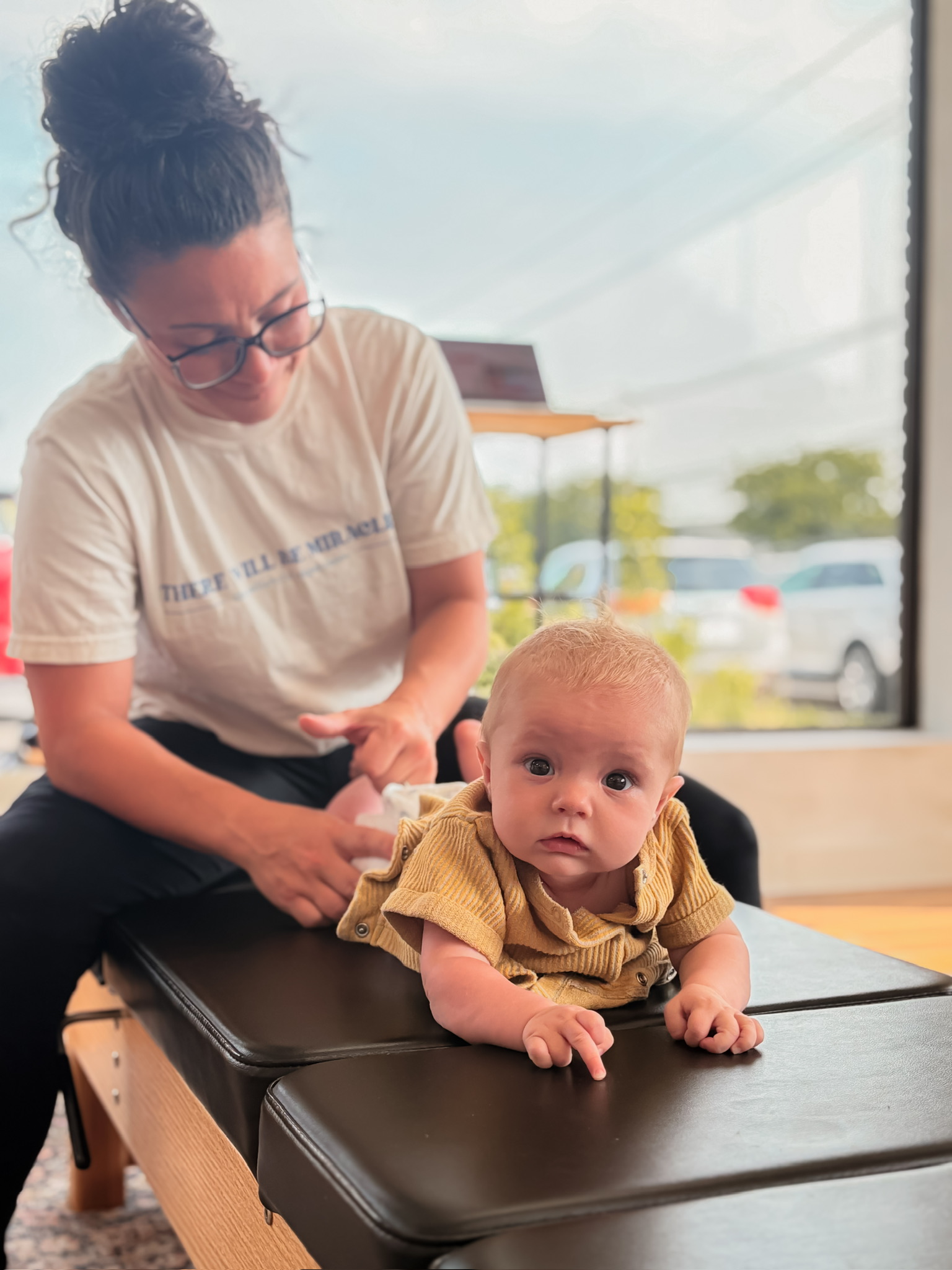
From there, Neurologically-Focused Chiropractic Care uses gentle, specific, neurologically targeted adjustments to restore signal clarity. This isn’t the loud cracking you might be picturing. We’re talking about restoring clean communication between the brain and body.
And here’s the key principle that changes outcomes: foundation before function. We get the nervous system regulated first. Then everything else — occupational therapy, speech therapy, gut work, nutrition — starts working better. This is what we call the Multiplier Effect.
Healing follows a predictable sequence when the foundation is in place: body soft signs first, then brain-based improvements. Sleep improves before digestion. Digestion before immune. Immune before motor. Motor before sensory. Sensory before behavior. Behavior before speech. Speech before cognition. It’s not random. It’s predictive neurophysiology — and it gives families a clear roadmap.
What I Want You to Walk Away With Today
Your child’s chronic challenges are not random. They are not simply genetic. They are not “just how they are.”
There is a root cause. There is a nervous system explanation. And there is a clearer path forward.
We’re not here to tell you to throw out everything else you’re doing. We’re telling you to put the foundation in place first — and then focus obsessively on the sequence — and we would love to help with that. When you get the order right, healing starts to happen in a way that feels more predictable, more consistent, and a whole lot less exhausting.
So don’t wait to reach out to Rooted Family Chiropractic today to schedule a consultation. If you are not local to us, check out the PX Docs directory to find a PX Doc near you.
If this resonates — if you’ve been searching for the missing piece — the next step is getting the scans and finding out what’s actually happening in your child’s nervous system.
You deserve real answers. Your child deserves the foundation.
